
DeepSeek R1 vs V3 – which model should you actually run locally in 2026? Most people get confused because they think V3 is just a newer version of R1. It is not. They work completely differently.
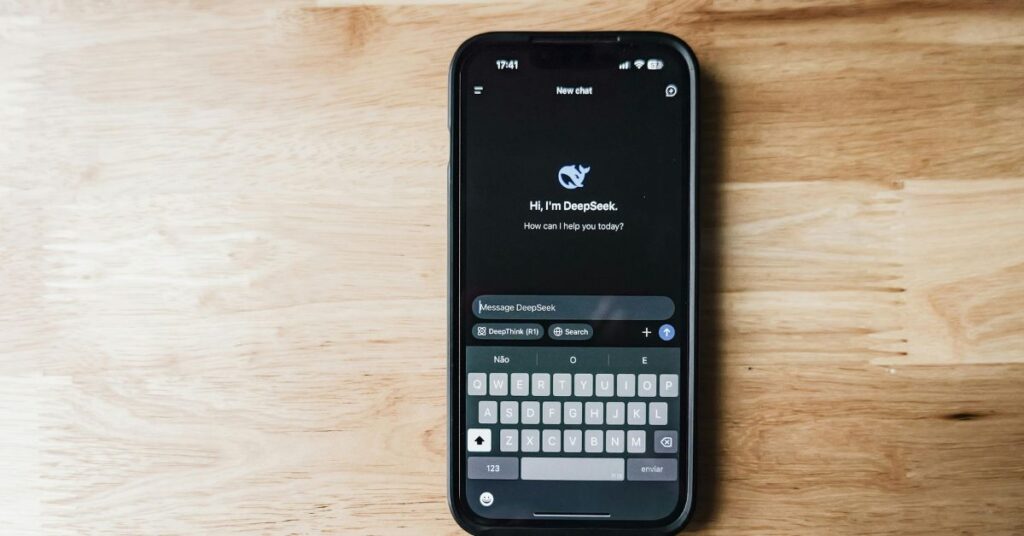
Yesterday, I showed you how to run DeepSeek locally using Ollama. (If you haven’t done that yet, go do it now!)
But once you open your terminal, you face a confusing choice:
“Should I download DeepSeek-R1 or DeepSeek-V3?”
Most people think V3 is just an upgrade of R1. It is not. They are two completely different beasts. I spent my Saturday morning testing both, and here is what you need to know.
1. DeepSeek-R1: The “Thinker”
Best for: Complex Logic, Math, Debugging Hard Code.
R1 is a “Reasoning Model” (similar to OpenAI’s o1). Before it answers, it thinks. It creates a “Chain of Thought” to break down your problem.
- Pros: Extremely smart. It can solve riddles and complex algorithms where other AIs fail.
- Cons: It is SLOW. It might take 30 seconds just to start typing because it is “thinking.”
2. DeepSeek-V3: The “Chatter”
Best for: Creative Writing, Emails, Simple Python Scripts, Autocomplete.
V3 is a standard LLM (like GPT-4o). It predicts the next word instantly. It doesn’t overthink; it just replies.
- Pros: Blazing fast. Perfect for “Vibe Coding” where you need quick suggestions.
- Cons: It might hallucinate on very complex logic puzzles.
The Cheat Sheet
| Task | Winner |
|---|---|
| Writing an Email | V3 (Faster) |
| Debugging a Memory Leak | R1 (Smarter) |
| VS Code Autocomplete | V3 (Instant) |
| Solving Math Problems | R1 (Precise) |
3. Deep Dive – How R1’s Reasoning Actually Works
When you ask DeepSeek-R1 a complex question, something fascinating happens before it replies.
R1 generates what is called a “Chain of Thought” – an internal monologue where the model literally talks to itself to work through the problem.
Example: You ask R1 to debug a complex recursive function.
Instead of immediately guessing an answer like V3 would, R1 first thinks: “Okay, the function is recursive. Let me trace through the base case first. Hmm, the base case returns correctly. Now let me check what happens when n=3…”
This thinking process takes 10-30 seconds. But the answer you getis significantly more accurate than any fast model.
This is called “Test-Time Compute” – using more processing power at the moment of answering to produce better results. It is the same technique OpenAI uses in their o1 and o3 models.
For developers debugging tricky code or solving algorithm problems, this extra thinking time is 100% worth the wait.
4. Deep Dive – Why V3 is Perfect for Daily Use
DeepSeek-V3 does not think. It predicts. And for most daily tasks, that is exactly what you want.
The architecture is a “Mixture of Experts” (MoE) model. Instead of using all 671 billion parameters for every query, it activates only the 37 billion parameters most\ relevant to your specific question.
Result: Blazing fast responses with surprisingly deep knowledge.
When you are in VS Code doing Vibe Coding and you need instant autocomplete suggestions for a React component – waiting 30 seconds for R1 to “think” would destroy your flow. V3 responds in under 2 seconds and keeps you in the zone.
Want to know which AI code editor pairs best with local DeepSeek? Read our Cursor vs Windsurf review.
5. Real Benchmark – 4 Tests I Ran
I spent a Saturday morning running 4 real tests on both models. Here are my honest results:
Test 1: “Write a Python web scraper for Amazon prices”
R1: Took 45 seconds to start. Generated clean, well-commented code with proper error handling. Added rate limiting automatically.
V3: Responded in 3 seconds. Code worked but had no error handling and would break on dynamic pages.
Winner: R1 (for production code)
Test 2: “Write a professional email declining a meeting request”
R1: Took 20 seconds. Email was perfect but formal to the point of being stiff.
V3: Responded instantly. Email was warm, professional, and sounded more human.
Winner: V3 (for communication)
Test 3: “What is 17 multiplied by 23, then divided by 3, minus 45?”
R1: Showed its working step by step. Got the right answer (86.67).
V3: Gave an answer immediately. Also correct — but without showing its work.
Winner: Tie (but R1 is more trustworthy for complex multi-step math)
Test 4: “Explain quantum entanglement to a 10-year-old”
R1: Gave a technically perfect explanation that was still too complex for a child.
V3: Used a brilliant analogy about twins who always wear the same colored socks even when far apart. Perfect for a child.
Winner: V3 (for creative explanations)
6. Which One to Install Based on Your Laptop
Here is a practical guide based on your hardware:
4GB RAM (very old laptop):
→ Not recommended for either model
→ Use DeepSeek online for free at chat.deepseek.com
8GB RAM (basic laptop):
→ deepseek-coder:1.3b only
→ Limited but functional for basic coding help
16GB RAM (standard developer laptop):
→ deepseek-v3:7b = Daily driver ✅
→ deepseek-r1:7b = For hard problems
32GB RAM (high-end machine):
→ deepseek-v3:32b = Excellent quality
→ deepseek-r1:32b = Near GPT-4 level
Apple MacBook M2/M3/M4:
→ Both models run excellently thanks to unified memory
→ M3 Pro with 18GB = Recommended for deepseek-v3:14b
FAQs: DeepSeek R1 vs V3
Q1: Can I have both R1 and V3 installed at the same time? Yes! Ollama lets you download multiple models. Run “ollama list” to see all installed models and switch between them anytime.
Q2: Which is better for learning to code as a beginner? V3 is better for beginners because it explains things quickly and patiently. R1 is better for advanced problems.
Q3: Will running these models damage my laptop? No. Your CPU and GPU will work hard (fans will spin faster), but this is normal and safe for modern laptops.
Q4: Is DeepSeek R1 the same as OpenAI o1? They use similar reasoning techniques but are separate models. R1 is open-source and free. OpenAI o1 requires a $20/month subscription.
Q5: Can I use both models in VS Code at the same time? Not simultaneously, but you can switch between them in the Continue extension settings within seconds.
Q6: Which is better for writing blog posts? V3 is significantly better for writing tasks. R1’s overthinking makes it stiff and formal for creative work.
My Verdict
If you are running this on a laptop with limited RAM:
Start with DeepSeek-V3 (7B or 8B version). It is fast, lightweight, and handles 90% of daily tasks perfectly. Only switch to R1 when you are truly stuck on a hard problem.
Which one are you downloading today? Let me know in the comments!