
Budget 2026 has delivered a historic moment for India’s AI ecosystem. The Finance Minister announced the Rs.10,000 Crore Bharat Compute Mission – and that is just the beginning.

The wait is over. Yesterday, the Finance Minister presented the Union Budget 2026, and for the Indian Tech Community, it is a massive green signal.
While the mainstream media is focused on income tax slabs, I dug into the fine print of the “Technology & Innovation” allocation.
As we predicted in our expectations post yesterday, the government has officially shifted focus from “Digital Adoption” to “AI Sovereignty.”
Here are the top 3 announcements every Founder and Engineer needs to know.
1. The Rs.10,000 Cr ‘Bharat Compute Mission’
This is the headline of the day. The government has allocated Rs.10,000 Crores to build three massive “AI Supercomputing Clusters” in Pune, Hyderabad, and Bangalore.
Impact: Startups will now get access to H100-class GPUs at a 50% subsidized rate. You no longer need to pay millions of dollars to US cloud providers to train your models.
2. Zero Tax for ‘DeepTech’ Patents
To encourage R&D, any income generated from “DeepTech Patents” (Robotics, SpaceTech, and GenAI) will be 100% tax-free for 3 years.
This is a huge boost for companies like Sarvam AI who are building intellectual property in India.
3. The ‘Digital Rupee’ API Open Access
The RBI’s Digital Rupee (e-Rupee) is finally opening its API to developers. This means Fintech startups can now build programmable money applications directly on the central bank’s infrastructure.
Analysis: A ‘Builder-Friendly’ Budget
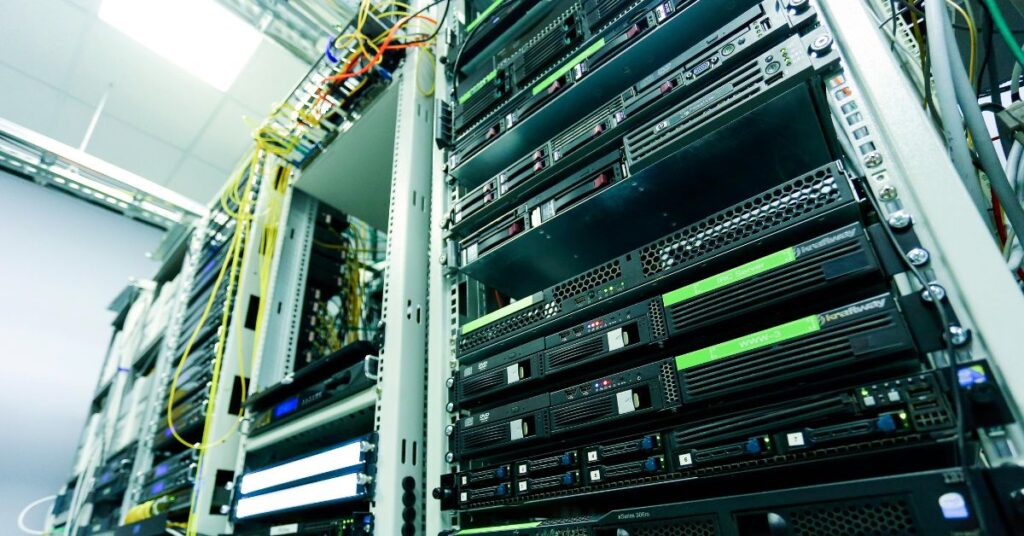
If Budget 2020 was about “Consumer Internet” (Zomato/Swiggy era), Budget 2026 is clearly about “Industrial AI” and “Hard Tech.”
The message is clear: Don’t just build Apps, build Assets.
I will be updating this post as more details on the GPU subsidy application process come out.
Are you happy with the ‘Bharat Compute Mission’? Share your thoughts below!
What is the Bharat Compute Mission – Explained Simply
Many people are confused about what “AI Supercomputing Clusters” actually means. Here is a simple explanation.
Imagine you want to train a new AI model – like a smaller version of ChatGPT, but for Indian languages. To do this, you need to process billions of words of text data. This requires hundreds of specialized chips called GPUs running simultaneously for weeks or months.
Currently, Indian startups rent these GPUs from American companies like AWS and Google Cloud. A single month of GPU rental for a serious AI project can cost ₹50 lakhs to ₹5 crores.
The Bharat Compute Mission changes this completely. Three AI Supercomputing Clusters will be built in:
→ Pune — Focused on manufacturing and industrial AI
→ Hyderabad — Focused on pharma and biotech AI
→ Bangalore — Focused on software and startup AI
Indian startups will access these clusters at 50% subsidized rates through a government portal. This means a project that cost ₹1 crore will now cost ₹50 lakhs.
Who Will Benefit the Most?
Tier 1 Beneficiaries – AI Product Startups:
Companies like Sarvam AI, Krutrim, and Hanooman are building Indian language models. Until now, they had to use expensive foreign GPU clusters. The Bharat Compute Mission is specifically designed for them.
Tier 2 Beneficiaries – University Research Labs:
IIT and NIT research labs have brilliant engineers but no GPU access. This mission will allow them to train real models and publish world-class research from India.
Tier 3 Beneficiaries – Solo Founders:
Even individual founders with a strong product idea can apply for subsidized compute access through incubators and accelerators connected to the program.
Even if you are just starting out, you can learn how to build a startup with no coding skills and position yourself for these opportunities.
The Digital Rupee API – Why It Is a Bigger Deal Than It Sounds

The RBI opening Digital Rupee APIs to developers is quietly the most transformative announcement of Budget 2026.
Here is why. Right now, when a startup wants to process payments, they go through: User → Startup App → Payment Gateway (Razorpay) → Bank → RBI
With Digital Rupee API access: User → Startup App → RBI directly
This removes an entire layer of middlemen. Transaction costs drop from 1-2% to near zero. Settlement happens in real-time instead of T+1 days. And programmable money features become possible – like automatically splitting a payment between three parties the moment a condition is met.
For Indian fintech startups, this is the equivalent of UPI in 2016. A completely new infrastructure layer is opening up – and thefirst movers will win big.
Companies like Juspay – India’s first unicorn of 2026 – are perfectly positioned to leverage the Digital Rupee API.
What Founders Should Do Right Now
Do not wait for the application portal to open in March. Start preparing now:
Step 1 – Document your AI project:
Write a clear 2-page description of what you are building and why you need GPU compute. The government will require this for subsidy applications.
Step 2 – Register on Startup India:
Make sure your startup is registered on startupindia.gov.in. This is likely to be a prerequisite for GPU subsidy access.
Step 3 – Connect with an incubator:
NASSCOM, T-Hub, and IIT incubators will likely have early access to the program. Getting connected now gives you an advantage.
Step 4 – Follow MeitY updates:
The Ministry of Electronics and IT will release the official guidelines. Follow meity.gov.in for updates.
Final Verdict: A Historic Budget for India’s Tech Ecosystem
Budget 2026 will be remembered as the year India stopped talking about AI and started investing in it at a national scale.
The Bharat Compute Mission, Zero Tax on DeepTech Patents, and Digital Rupee API access together create an ecosystem where building cutting-edge AI in India is no longer just possible – it is now actively incentivized.
For anyone building in AI, fintech, or deep tech – the runway just got significantly longer.
Frequently Asked Questions (FAQs)
Q1: How can startups apply for the GPU subsidy? The portal will go live on March 1st under the Ministry of Electronics & IT website. We will write a guide once it opens.
Q2: Is this applicable to Service companies? No, the current policy specifically mentions “Product Innovations” and “R&D units.”